Alchemy, traditionally known as the hermetic art that sought the transmutation of base metals into gold and the discovery of the philosopher’s stone and the elixir of life, has transcended its mere operative definition to become a system of thought with profound interdisciplinary value. Far from being a mere failed protoscience, alchemy constitutes a complex symbolic language whose study is indispensable for disciplines such as symbolics, depth psychology, the history of art and culture, in addition to retaining an undeniable spiritual value.
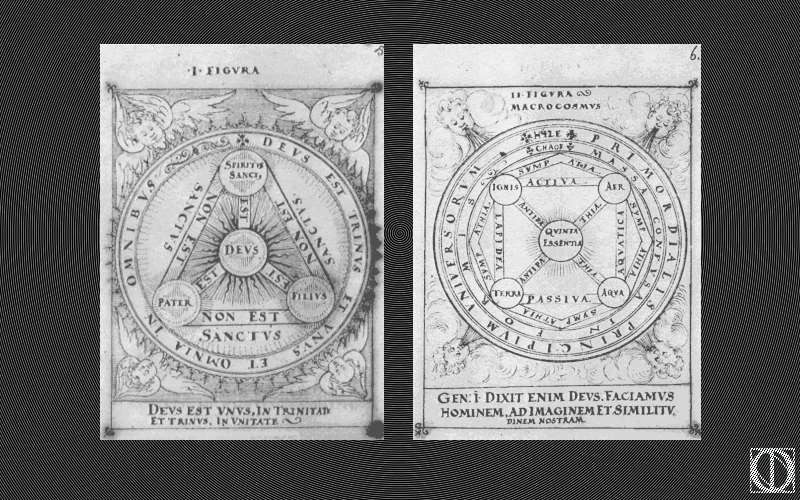
First, for symbolic studies, alchemy is a fundamental corpus of reference. Its vast repertoire of images—the dragon, the androgyne, the copulation of the King and Queen, the processes of putrefactio, solutio, and coagulatio—should not be read literally, but as a sophisticated code describing processes of internal transformation. The alchemists, forced to hide their knowledge under the veil of hermeticism, developed a “semiotics of the occult” where every substance, color, and laboratory operation is a signifier of a metaphysical or psychological reality. Studying its symbolism is to delve into a universal grammar of transformation.
From the perspective of depth psychology, particularly the Jungian school, alchemy found its most eloquent modern interpretation. Carl Gustav identified in alchemical procedures and symbols a historical prefiguration of his theory of the process of individuation. For Jung, the alchemical opus was an archetypal projection of the unconscious that represented the integration of the conscious and unconscious aspects of the psyche (the conjunctio oppositorum or union of opposites) to achieve the wholeness of the Self, symbolized by the philosopher’s stone. Thus, the alchemist’s laboratory becomes the psyche itself, and its furnace (athanor), the heat of psychological confrontation.
For the history of art and culture, alchemy offers an essential key for deciphering the imagery of the Renaissance and Baroque periods. Artists such as Hieronymus Bosch, Pieter Bruegel the Elder, or Diego Velázquez, and patrons like Emperor Rudolf II of Habsburg, were deeply imbued with Hermetic ideas. Numerous works of art, apparently secular or religious, are loaded with alchemical iconography that reveals a worldview where matter and spirit, science and mysticism, were not separated. Understanding these symbols enriches our reading of cultural heritage, showing the underground currents that have shaped Western thought.
Finally, its spiritual value remains intact. Alchemy proposes a path of self-knowledge and moral perfection. The search for gold was not only material but primarily a metaphor for the quest for enlightenment, the purification of the soul, and union with the divine. The alchemist, through patient and dedicated work (the magnum opus), had to transmute himself simultaneously with his work in the laboratory. This ethical-spiritual dimension, present in traditions all over the world, positions alchemy as a path of inner realization that continues to resonate in the contemporary search for meaning.
In conclusion, alchemy is much more than a historical curiosity. It is a system of wisdom that, through its symbolic language, serves as an indispensable bridge connecting science, art, psychology, and spirituality, offering a profound narrative about the universal human yearning for transformation and fulfillment.