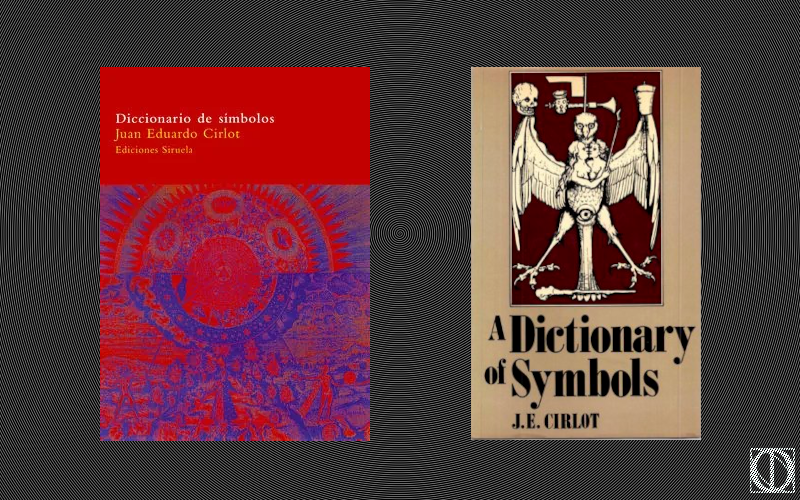
Diccionario de símbolos (Dictionary of Symbols) by Juan Eduardo Cirlot is not a conventional reference work but the culmination of a lifetime dedicated to decoding the hidden language that, according to the author, underlies all cultures, religions, dreams, and works of art. First published in 1958, Cirlot continuously expanded and revised it until his death. The posthumous 1991 edition, prepared by his daughter Victoria Cirlot, is considered definitive, incorporating new appendices and entries.
Structure and Method
The dictionary is organised alphabetically, from Abismo (Abyss) to Zorro (Fox). Its immense value, however, lies in its comparative method. Each entry is not a mere definition but a concise essay tracing the symbol’s presence through alchemy, Kabbalah, Norse or Greco-Roman mythology, folklore, Jungian psychology, and modern art. Cirlot does not simply describe; he interprets and connects, revealing a web of correspondences that points to a unified vision of human expression. This approach draws directly from the influence of Marius Schneider and authors like René Guénon and Carl Gustav Jung.
Critical Reception and Lasting Value
The dictionary’s greatest strength is its staggering erudition and its ability to synthesise disparate sources into a coherent vision. It is an invaluable tool for artists, writers, and scholars of comparative religion and iconography. Its main criticism from academic circles stems from a perceived “subjectivity”; at times, poetic and symbolic connection can take precedence over strict historical-philological rigour. Its heavily Jungian, universalist approach can sometimes overlook the specific cultural context of a symbol in favour of its archetypal meaning. Despite this, its enduring legacy is its power to inspire interpretation and to reveal the deep structures connecting ancient wisdom to modern creativity.
Editions and Translations
The publishing history of the Diccionario de símbolos reflects its growing international influence. The most complete and accessible Spanish edition is the 1991 version published by Siruela, edited by Victoria Cirlot. Its importance led to translations into numerous languages, including:
- English: A Dictionary of Symbols (Routledge, 1962; 2nd ed. 1971). The translation by Jack Sage became a standard reference in the Anglophone world.
- French: Dictionnaire des symboles (initially by Belfond, later by Éditions Jacques Grancher).
- Italian: Dizionario dei simboli (Editoriale Mediterranee).
- Portuguese: Dicionário de símbolos (Editora Moraes).
- German: Das Wörterbuch der Symbole (Diederichs Verlag).
Conclusion
In conclusion, Cirlot’s Dictionary of Symbols is a monumental, personal, and erudite work. It is less a book of consultation than a map of the human imagination, a testament to the belief in a meaningful order behind the apparent chaos of images. Its legacy endures precisely because of its capacity to open doors of perception.